
Your deck used to be the spot where everyone gathered. Now the boards have gone gray, a few feel soft when you walk across them, and you are weighing repainting a deck against something more involved. Repainting a deck sounds quick and cheap, while deck resurfacing sounds like the fix that actually holds up. Here in Camas, where rain falls more days than not, that choice matters more than most homeowners expect. Pick wrong, and you could be staring at peeling paint by the time next winter rolls around, or paying for new boards when a good cleaning would have done the job.
So which one makes sense for your deck? The honest answer is that it depends on what the wood and the frame are telling you. Let’s break down both options in plain terms, look at what the research says, and help you spend your money where it counts.
Key Takeaways:

First, What Are We Actually Comparing?
People use these words loosely, so let’s get specific.
Repainting a deck means cleaning the surface and rolling on a fresh coat of paint or solid-color stain. The color sits on top of the wood. It covers stains, evens out the look, and costs the least of any option. The catch is that paint sits on the surface rather than soaking in.
Deck resurfacing goes a layer deeper. It usually means pulling up the worn top boards and the railing, then installing fresh decking on the existing frame. Some crews also use the word for heavy restorative coatings built to rebuild a worn surface. Either way, deck resurfacing gives you a new walking surface without rebuilding the whole structure underneath.
The third option nobody likes to mention is full replacement. We will get to why that one matters near the end, because skipping it can be dangerous.
Why the Wet Climate Changes the Math
Camas gets more than 60 inches of rain in an average year. The national average sits near 38 inches. That extra water is the single biggest reason a finish fails early around here.
This is where the science gets useful. Paint and solid-color stains are what researchers call film-forming finishes. According to the USDA Forest Products Laboratory, these finishes are prone to trap moisture and fail by peeling on decks. The lab recommends penetrating finishes for deck boards instead, because they let the wood breathe.
Read that again, because it cuts against the cheap option. When you are repainting a deck in a rainy place, you are adding a layer that can hold water against the wood. On a vertical wall, paint sheds water and lasts for years. On a flat deck that takes sun, foot traffic, and standing rain, that same paint cracks and peels far sooner. So repainting a deck can look great in July and start flaking by spring.
That does not make repainting a deck wrong. It makes it a short-term play. If you want two or three good seasons and a fresh look for a sunny summer, paint can deliver that. Just go in with clear eyes about how long it holds.
When Repainting a Deck Is the Smart Move
Repainting a deck makes sense when the bones are good and the surface is only tired-looking.
In these cases, repainting a deck buys you time and curb appeal for the lowest cost. Pair it with a yearly wash and a fresh coat every few years, and you can stretch the life of an aging deck while you save for a bigger project.
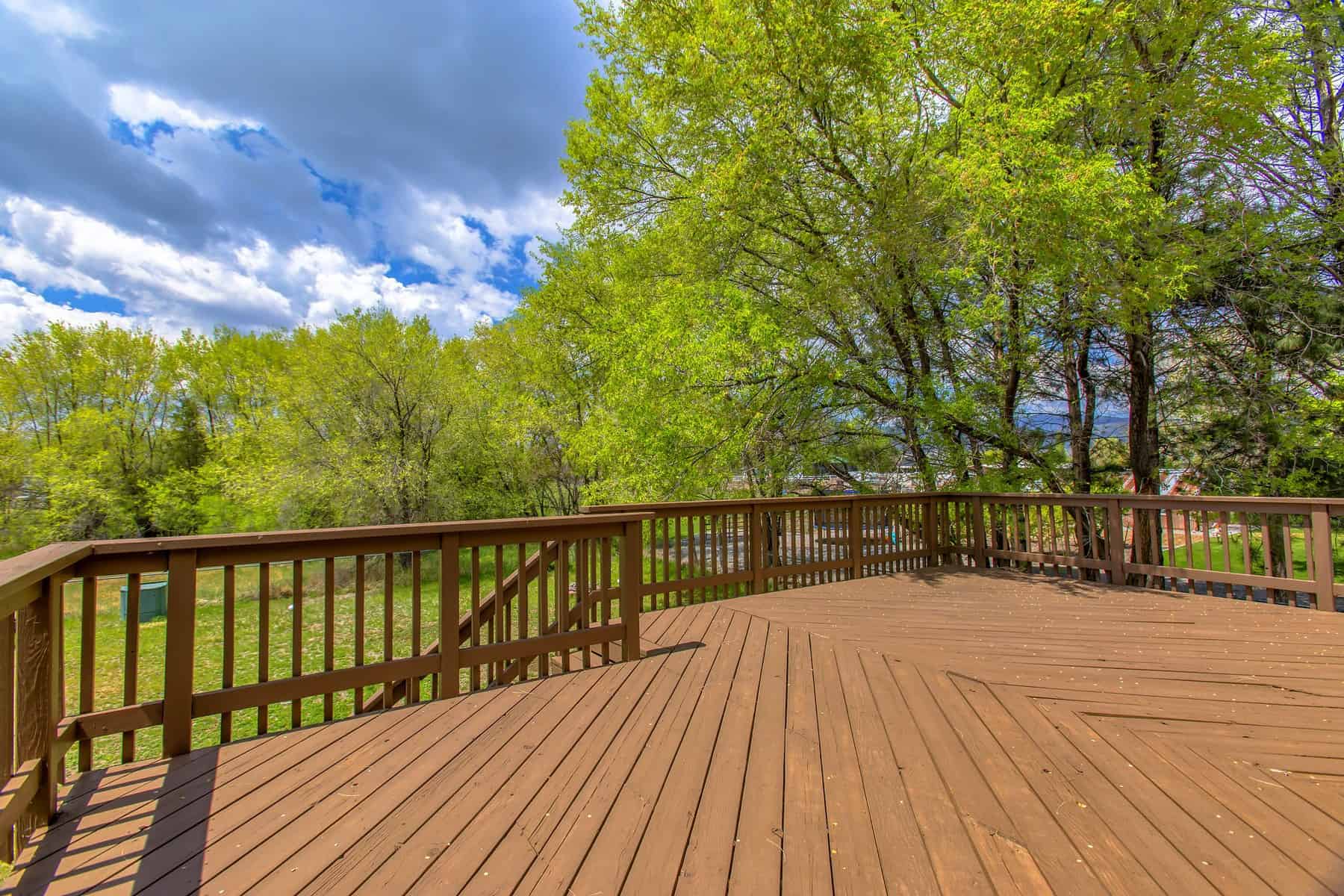
When Deck Resurfacing Is Worth the Extra Cost
Deck resurfacing earns its higher price when the surface is failing but the structure is still sound.
Think splintered boards, raised nail heads, cupping, or paint that has peeled so many times that one more coat will not stick. If your joists, beams, and posts are solid, deck resurfacing lets you keep that good frame and walk on a fresh surface. You get the look and feel of a new deck for less than a full rebuild. The deck resurfacing cost up front is higher, and that is real money you should plan for.
This is also where the long game favors resurfacing. A paint job you redo every two or three years adds up fast. New boards with a penetrating finish can run for a decade or more with simple upkeep. Spend a little time on the math and resurfacing often wins over ten years, even though it stings more on day one.
Deck resurfacing cost is not one-size-fits-all. It moves with your square footage, the decking material you choose, and how much of the old surface has to come off. That is why a walk-on inspection beats any number you punch into an online calculator. A real look at your deck gives you a real deck resurfacing cost, not a guess.
The Option That Outranks Both: Safety
Here is the part most articles skip. Neither repainting a deck nor deck resurfacing fixes a deck that is not safe to stand on.
The numbers are sobering. The North American Deck and Railing Association estimates there are more than 60 million decks in the United States, and about 30 million of them are past their useful life. A wood deck typically lasts 15 to 20 years with regular care. Many decks on older Camas homes sit right in that danger zone.
If the ledger board is pulling away from the house, if posts wobble, or if the framing is rotted, no coat of paint or set of new top boards will make it safe. Putting a pretty surface on a failing frame just hides the risk. In that case, replacement is the responsible call. A contractor who tells you that, even when it costs them the smaller job, is one worth trusting.
How to Make the Call
You do not need to be an expert to start. You need a clear order of operations.
That simple path keeps you from overspending on a deck that needs little, and from underspending on one that needs a lot.
Get a Straight Answer About Your Deck
You deserve a clear recommendation, not a sales pitch aimed at the priciest job on the menu. At PaintPaul Painting, we look at your frame, your boards, and your goals, then tell you which option fits: repainting a deck, deck resurfacing, or replacement. If the cheaper fix is the right one, that is what we will say.
Want to know what your deck really needs before the next rainy stretch? Call PaintPaul Painting at 360-502-2381 for a deck assessment. We will walk your deck with you, explain what we see in plain words, and hand you an honest deck resurfacing cost or paint estimate so you can decide for yourself. Your deck has a lot of good years left in it, and the right plan starts with one straight conversation.